The Immense Tonlé Sap Lake
The Immense Tonlé Sap Lake
Southeast Asia's largest freshwater expanse and UNESCO Biosphere Reserve, Tonlé Sap is visited from Siem Reap via its floating villages.
The Tonlé Sap is at once a lake, a river, and a hydrological system unique in the world. Designated a UNESCO Biosphere Reserve in 1997, it stretches across a floodplain of 12,876 km² in northwestern Cambodia and represents Southeast Asia's largest freshwater expanse. From Siem Reap, a half-day excursion allows you to reach its floating villages and understand the vital importance of this lake to the country.
Why visit Tonlé Sap
The name Tonlé Sap translates to "the great freshwater river" or "the great lake." This dual designation reflects the uniqueness of the place: it is impossible to draw a clear boundary between the river, stretching 120 km and connecting the lake to the Mekong, and the water body itself. The entire system acts as a natural regulator of Mekong floods and shapes the life of a significant portion of Cambodia.
Its value extends far beyond its size. Tonlé Sap provides more than half the fish consumed in Cambodia, accounting for approximately 75% of annual freshwater catch volume and 60% of the population's protein intake. More than three million people live around the lake, with 90% dependent on fishing and agriculture. Visiting Tonlé Sap means observing a productive ecosystem where inhabitants have organized their daily lives in rhythm with the waters.
What to see and do on the lake
Biodiversity recognized by UNESCO
The lake is home to more than 100 varieties of aquatic birds, including storks and pelicans, as well as nearly 300 freshwater fish species, snakes, turtles, and otters. Ichthyologists categorize the fish into three groups: white fish (Trey pra ke), black fish (sand gobies), and small fish species. The alluvial forest bordering the lake serves as an essential breeding ground for aquatic wildlife.
The floating village of Chong Khneas
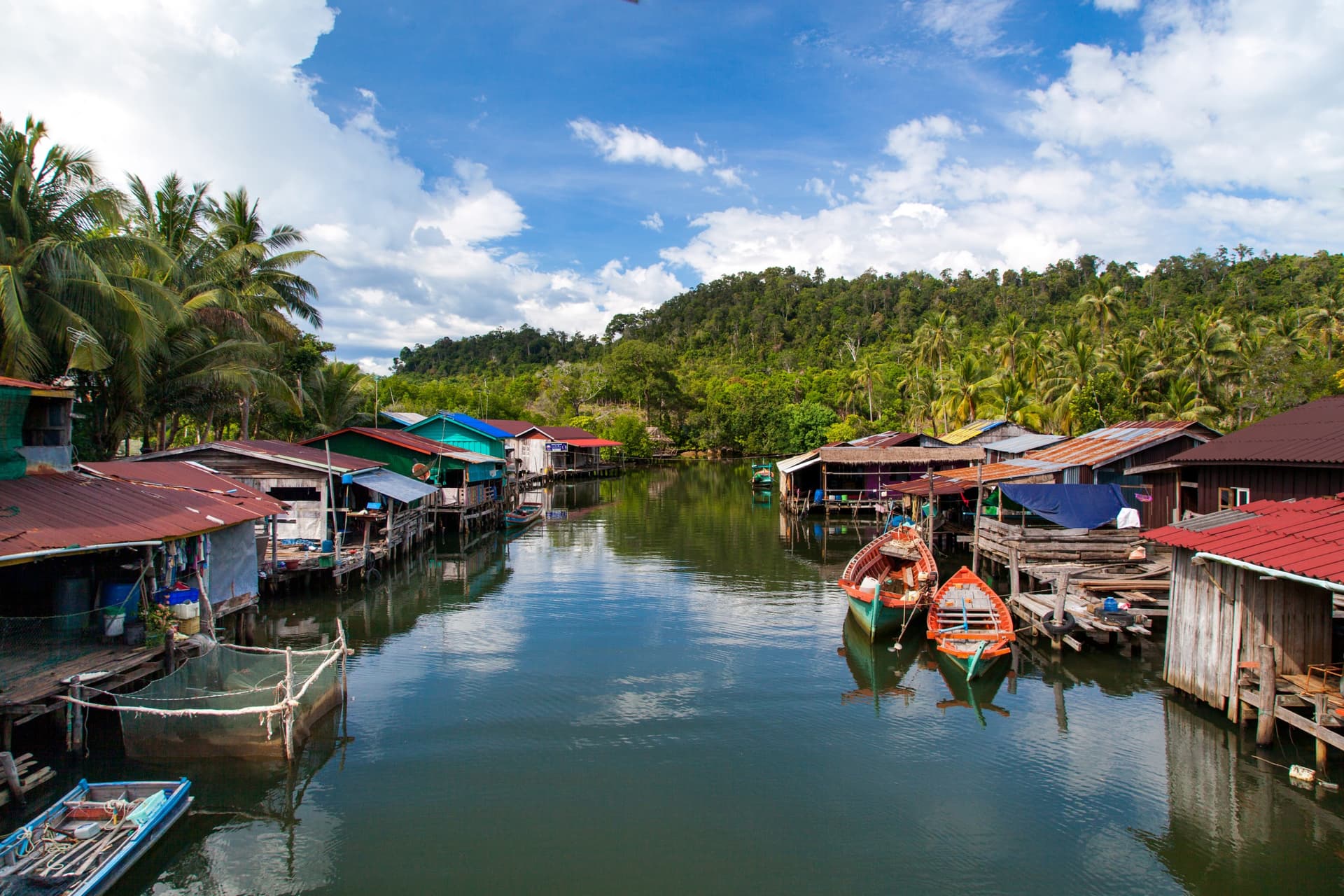
Located about fifteen kilometers south of Siem Reap, Chong Khneas is the most accessible village. Allow approximately 30 minutes of driving to reach the boarding dock, then nearly 2 hours of navigation to explore the village and surroundings. Three communities coexist here: Khmer, Cham Muslim, and Vietnamese. The village has schools, a clinic, shops, and small floating restaurants. The Gecko Environment Centre offers exhibitions on the ecology and biodiversity of the lacustrine zone, helpful for contextualizing your visit.
The Prek Toal bird sanctuary
At the far northwestern corner of the lake, Prek Toal is one of three core zones of the biosphere reserve and covers nearly 42,000 hectares. The site is renowned among ornithologists: you can observe ibises, spot-billed pelicans, cormorants, and adjutant storks. The flooded forest also shelters the slow loris, one of the world's smallest primates, most active at night. Access requires a permit issued by the Wildlife Conservation Society, which manages the sanctuary and collects an entrance fee. Favor very early morning or late afternoon departures for observation.
Navigating between stilt houses and painted boats
As you journey by water, you pass stilt houses, bamboo fish traps, and entire families traveling by pirogue. Local watercraft are recognizable by their large eyes painted on the bow, a traditional protective motif. In November, the Water Festival (Bon Om Touk) features colorful boat races: a highlight of the Cambodian calendar.
When to go
The lake transforms with the seasons, directly influencing your experience.
- Rainy season (June to November): fed by the Mekong, the lake reaches 14 meters in depth and expands to 10,000 km². Navigation is smoother, floating villages sit at the water's heart, and landscapes are most impressive.
- Dry season (November to May): the lake shrinks to approximately 3,000 km² with a depth of 2 meters. Access channels narrow, some houses rest on mud, and bird observation at Prek Toal is optimal between December and February.
To combine photogenic landscapes with comfortable navigation, the window October to early January remains a good compromise.
Practical information
- Duration of visit: allow a half-day for Chong Khneas, a full day for Prek Toal (early departure recommended).
- Rates: site entrance and boat rental are paid on-site; prices vary by village and group size. Budget moderately to substantially for Prek Toal due to the permit and longer journey.
- What to bring: hat, sunscreen, water, and protection for cameras against splashes.
- Good to know: favor operators who share a portion of proceeds with local communities, particularly through community centers at Chong Khneas and Kompong Phluk.
How to get there
The usual starting point is Siem Reap. For Chong Khneas, the boarding dock is about 15 km south of downtown, accessible by tuk-tuk or taxi in approximately thirty minutes. For Prek Toal, access is from Chong Khneas port by speedboat (1.5 to 2 hours depending on season) or via Battambang.
It is also possible to reach Siem Reap from Phnom Penh by taking the express boat that descends the Mekong then ascends Tonlé Sap: 6 to 7 hours in high waters, nearly 9 hours in low waters. The road connection between the two cities is now paved and remains the fastest and most economical option.
Nearby attractions
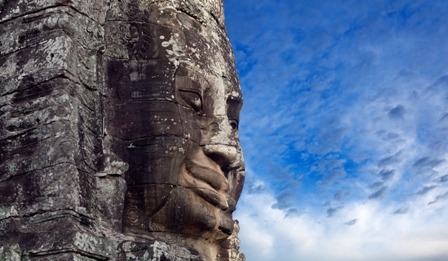
- Bayon Temple: in the heart of Angkor Thom, famous for its face towers, to combine with a day at the Angkor site.
- The Terrace of Elephants: a royal platform stretching 350 m, just steps from Bayon.
- Siem Reap: ideal base for exploring Angkor, Tonlé Sap, and surrounding artisanal villages.
Frequently asked questions
Frequently asked questions
From June to November, during the rainy season, the lake reaches its maximum level and landscapes are most spectacular. For bird observation at Prek Toal, however, the December-February window is most favorable.
Chong Khneas is closer to Siem Reap and can be visited in a half-day: ideal for a first approach. Prek Toal suits travelers interested in ornithology and willing to dedicate a full day and a larger budget.
A half-day suffices for Chong Khneas (including travel and navigation). For Prek Toal, plan a full day with pre-dawn departure.
Yes, but the experience varies significantly with the season. In the dry season, some villages end up far from the water and boat access can be more challenging.
Access to the bird sanctuary requires a permit issued by the Wildlife Conservation Society, typically organized by local agencies or obtained directly on-site at the visitor center.
Incorporating Tonlé Sap into your trip
Combined with the temples of Angkor and a stay in Battambang, Tonlé Sap offers a complete understanding of Cambodia: Khmer heritage, river life, and major ecosystems. To build a bespoke itinerary including Siem Reap, the lake, and its floating villages, explore our Cambodia tours.
Interested in this visit?
We can include it in your personalised itinerary.